Bellevue Wine Cellars · Services

Glass Wine Rooms in Bellevue

Bellevue Wine Cellars builds glass wine rooms in Bellevue: walk-in cellars glazed on the faces you see from the dining room, great room or entry, and built as an insulated, sealed and cooled room everywhere else. The glass is insulated double-pane, set in frames or a frameless system with sealed doors, and the cooling is sized for the heat that glazing lets through.

A glass room can fit a remodeled older house or a new build alike, and we build them in Bellevue and in Clyde Hill, Medina, Yarrow Point, Hunts Point and Redmond as well.

Request a glass wine room quote

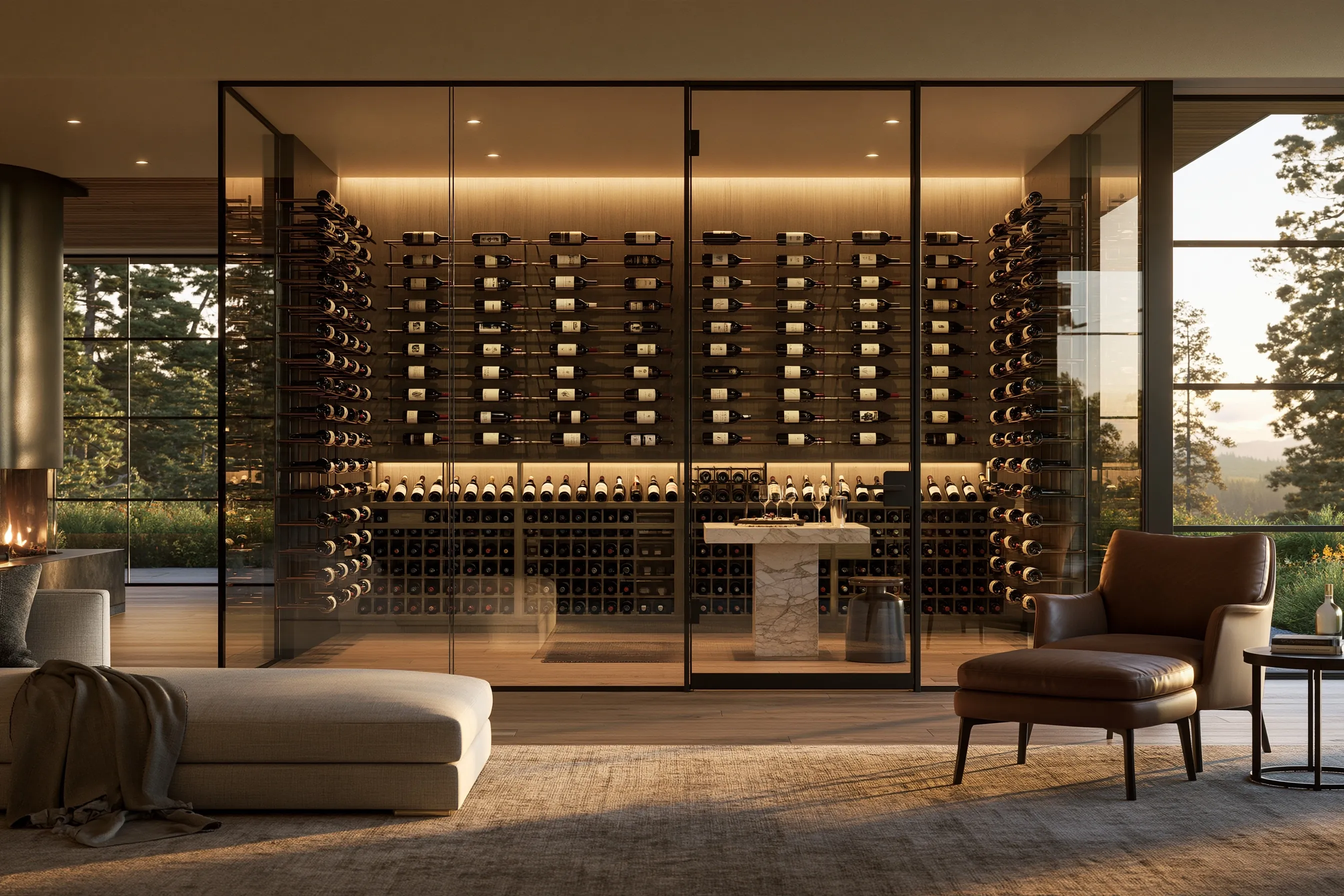
Slim black-framed glass wine room with label-forward metal racks and a marble tasting table, opening off a living room with a leather armchair

Glass wine room options

Walk-in glass wine rooms

A fully glazed front, and sometimes a side, opens the room to the house while the ceiling, back wall and floor are framed and insulated like any cellar, with manufacturer minimums for ceilings ranging from R-19 to R-30. Racking can face the glass so labels read from outside.

Glass fronts on an existing room

An existing framed cellar or a planned walk-in can take one glass wall or a glass door instead of a full enclosure. The solid walls keep their insulation and vapor control, and the cooling calculation is redone for the new glazed area.

Frameless vs framed insulated glazing

Numbers help here. On CellarPro’s chart a single pane insulates to roughly R-0.9 and a low-E double pane to around R-3, more than triple. A dealer guide notes that frames accept sealed double-pane units and close up more reliably, whereas frameless walls are made of 3/8 to 1/2 inch tempered or laminated glass. Choosing between them means weighing an uninterrupted view against extra heat gain and a higher chance of fogging.

Glass doors and seals

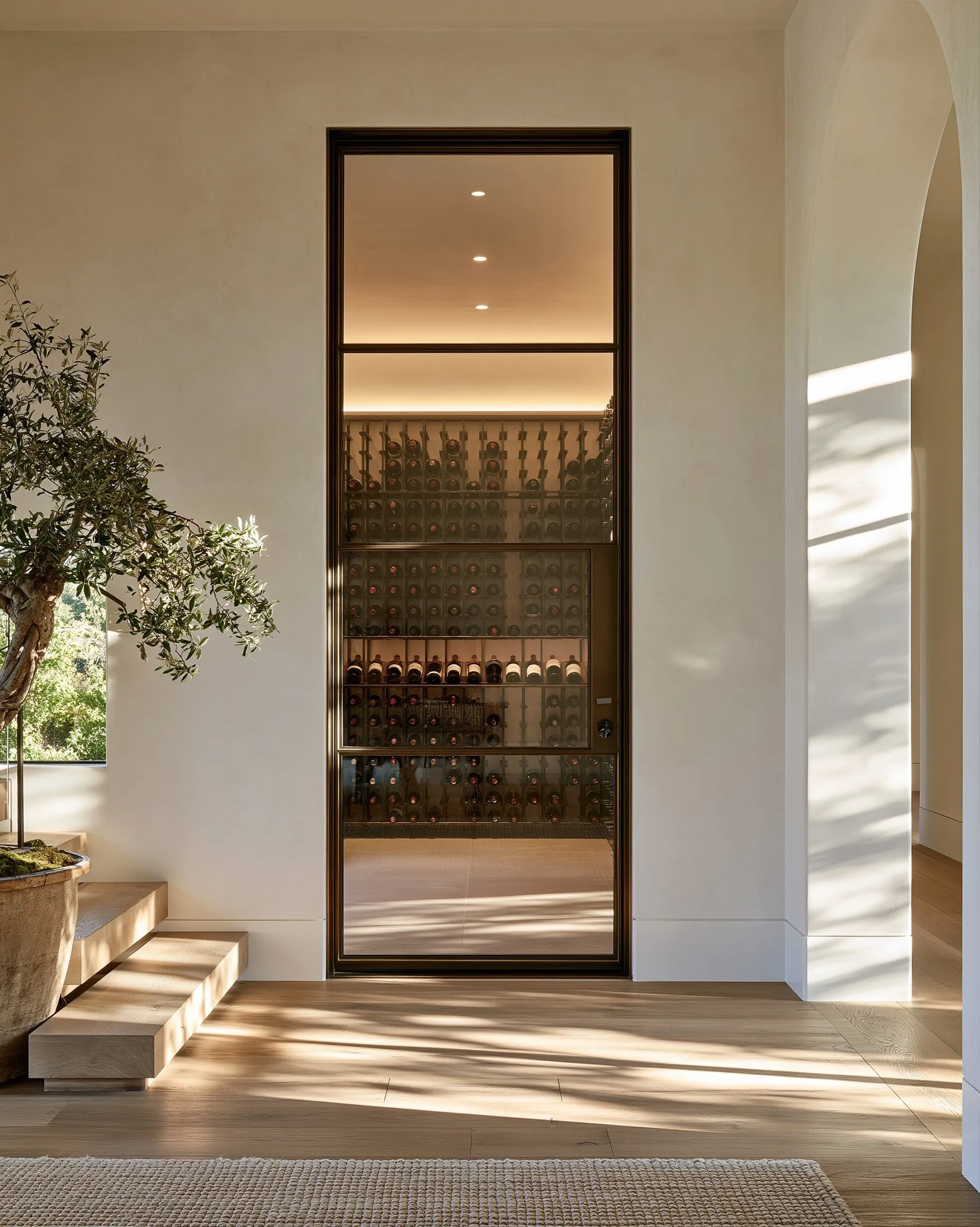
The door needs the same discipline as a solid cellar door: exterior-grade construction, weatherstripping on every side of the jamb, and a sweep or threshold. A poorly sealed door can keep the cooling unit running nonstop and shorten its life.

Tall dark-framed glass door into a lit wine room, set in a pale plaster hallway

Condensation and dew point

Fog appears once a glass surface is as cold as, or colder than, the dew point of the air against it (Guardian Glass). In a wine room, the pane is pulled two ways: the living space warms its outer face and the 55°F cellar chills it from behind. How cold that outer face ends up depends on the glazing build-up, the frame and the spacer, and insulated units hold it nearer room temperature, which is what keeps droplets off.

Cooling a glass room

Glass lets in far more heat than an insulated wall, and the cooling makers each handle that differently. Breezaire wants no glass in a cooled enclosure and excludes it from its sizing. WhisperKOOL’s advice is to go one model larger when glass doors are used near rated capacity. CellarPro requires a custom load calculation once glass enters the picture. Wine Guardian points glass-room owners toward ducted splits so that condenser heat is sent away from the room.

Lighting inside glass

A glass room is lit to be seen, which makes the light choice matter. LED strips add little heat; warm amber tones are gentler on whites and sparkling wines in clear bottles, and recessed cans are left out because they let warm air into the cellar.

Glass wine rooms in Bellevue remodels and new builds

Outdoor dew points at Sea-Tac average about 53°F in August, only a couple of degrees below a 55°F cellar; if the house air carries similar moisture, the room-side face of thin, cold glass can approach the fogging point. Insulated glazing keeps it warmer. With only around two days a year at 90°F or above on Sand Point normals, the bigger cooling question here is the glazed area and the sun the room gets, rather than outdoor heat.

Inside city limits, Bellevue asks for a permit when a remodel creates new walls or turns a basement into living space, and when circuits are added or moved; the city also issues its own electrical permits rather than leaving them to Washington L&I. A new glass room with its own circuit can therefore involve building and electrical permits; how the city treats the cooling equipment is something we confirm with Bellevue Development Services for each project.
Frequently asked questions

Will the glass fog up?

Not if the glazing keeps its room-side surface above the dew point of the house air. Insulated double-pane glass with a good frame and spacer keeps that face warmer than a single pane, so it is far less prone to fogging.

Can a glass wine room hold cellar temperature?

It can, provided the refrigeration is chosen for the glazing rather than for an all-insulated room of the same size. That means a room-by-room load calculation, and it can mean equipment that keeps the condenser out of the living space, such as the ducted splits Wine Guardian recommends.

Does a glass wine room need a permit in Bellevue?

If it adds new walls or a new circuit, yes: the City of Bellevue requires permits for both. How the city treats the cooling equipment is something we confirm with Bellevue Development Services.

Request a glass wine room quote

Sketch it in words: the room the glass would face, how many sides you picture glazed, whether it gets afternoon sun, and the address. We'll get back to you soon with an estimate or any questions we have. Estimates are free and there's no obligation.

Call (425) 699-8428

Call (425) 699-8428